Tell us about the job
Takes about a minute. No obligation.
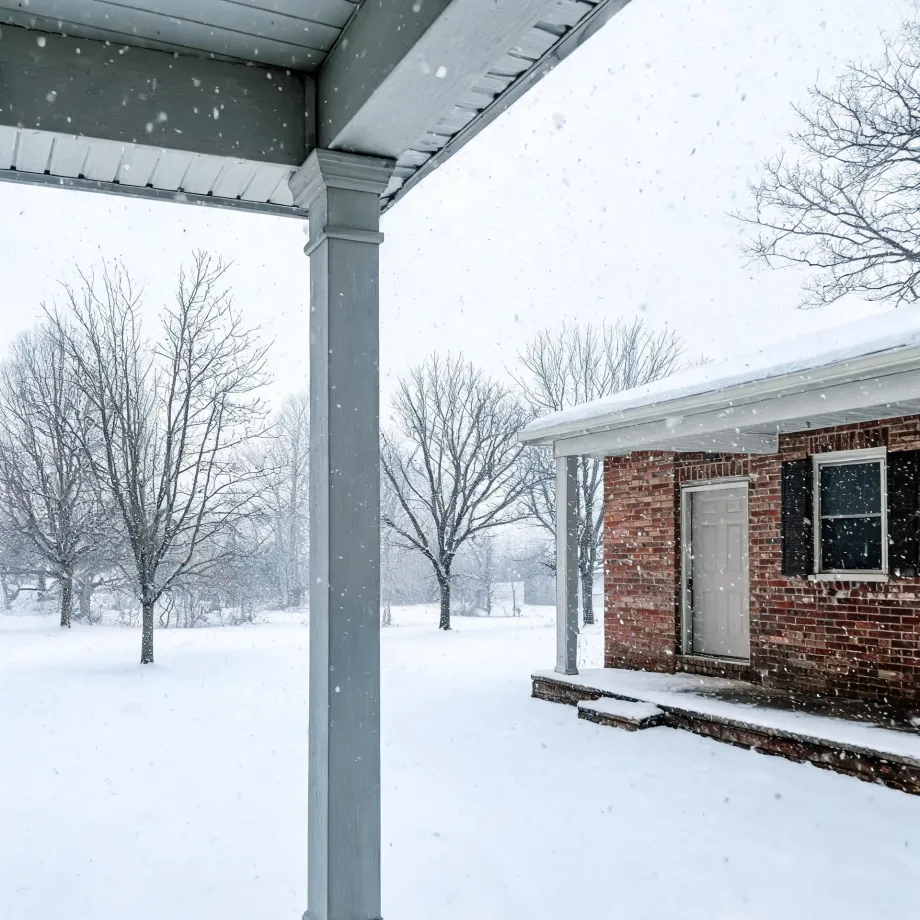
A heat pump in Carroll County earns most of its wear on the heating side, not the cooling side. Homes in Carroll County, NH run heat about nine months a year, from September through May. The compressor runs under load through the coldest months, and the defrost board triggers repeatedly whenever ice builds on the outdoor coil. Those are the components a contractor checks first on a repair call here: refrigerant charge, defrost termination, and the condition of the reversing valve that switches the system between modes. A unit that was undersized at installation shows those faults sooner than one that was properly matched to the house.
Half the homes in Carroll County, New Hampshire were built in 1982 or earlier (2020-2024 ACS 5-year). A house that age has likely had its heat pump serviced, swapped, or patched under previous owners, and what sits behind the panels today reflects those decisions. When a contractor opens the unit, what matters is the condition of the compressor, the state of the refrigerant circuit, and whether the parts the current system takes are still in production. Stock this old accumulates repair history faster than it accumulates square footage, and a quote built on the model number alone will miss what the opened equipment actually contains.
The Parts of a Heat Pump a Contractor Checks First
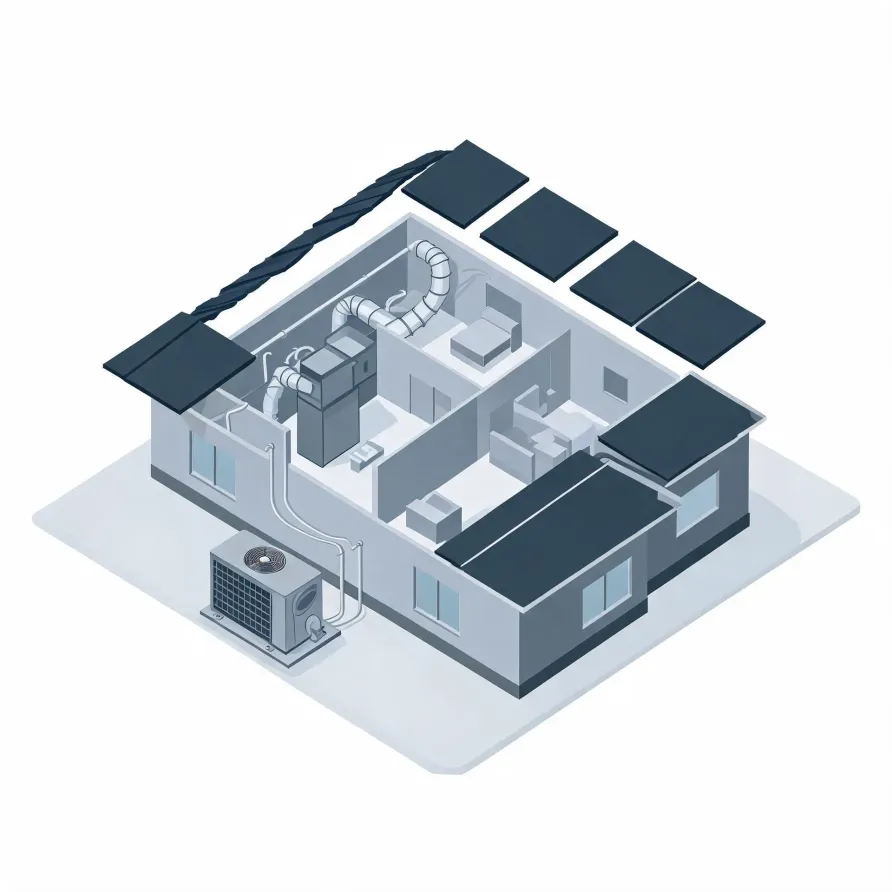
The outdoor unit sits outside the house and holds the compressor and condenser coil, which are the pieces doing the heaviest work in the system. When a heat pump stops heating or cooling, the compressor and that coil are where a contractor looks first. A failed compressor, a refrigerant leak at the coil, or a seized fan motor in that cabinet will each kill the system in its own way.
Inside the house, the air handler pushes conditioned air through the home and contains the evaporator coil and the blower. The reversing valve, which is what lets a heat pump run in both directions, sits inside the outdoor unit and is a common repair target when the system blows the wrong temperature. The refrigerant lines connecting the two units and the expansion valve that controls refrigerant flow round out what a contractor traces when diagnosing the problem.
The drawing shows a typical layout, and a licensed contractor determines exactly which components apply in your home.
Get matched in Carroll CountyCarroll County, by the numbers
214 severe weather events were recorded in Carroll County, New Hampshire between 2015 and 2024.
NOAA National Centers for Environmental Information, Storm Events Database, bulk CSV export, events 2015-01-01 through 2024-12-31.Half the homes in Carroll County, New Hampshire were built in 1982 or earlier (2020-2024 ACS 5-year).
U.S. Census Bureau, 2020-2024 American Community Survey 5-Year EstimatesCarroll County, New Hampshire holds 40,421 housing units (2020-2024 ACS 5-year).
U.S. Census Bureau, 2020-2024 American Community Survey 5-Year EstimatesOwners occupy 83.4% of the occupied homes in Carroll County, New Hampshire (2020-2024 ACS 5-year).
U.S. Census Bureau, 2020-2024 American Community Survey 5-Year EstimatesCodes & Standards Covering Heat Pump Repair in Carroll County, New Hampshire2 sourced rules and standards
Contractor Rules in Carroll County, New Hampshire
New Hampshire's mechanical licensing board issues nine credentials — hearth system, four fuel gas endorsements, domestic appliance technician, and master, journeyman and apprentice plumber — and a licensee may not work outside the specialty their licence names. None of the nine is an HVAC licence.
New Hampshire does not license HVAC as a trade, and says so where it matters: the plumbing licence expressly does not reach a person installing heating, cooling, air conditioning or domestic water heating systems, whether solar, oil, gas or electric. The gas piping on a gas-fired system is a separate matter and needs a fuel gas fitter licence.
Severe Weather Events in Carroll County
Weather in Carroll County puts real load on heat pumps, and that load adds up over time. Repair needs here are shaped by what the climate actually does to equipment, which is why local weather history belongs on a page about heat pump repair.
214 severe weather events, 2015–2024. Source: NOAA National Centers for Environmental Information, Storm Events Database.