Profile view of a bearded man wearing a black baseball cap and a dark gray T-shirt against a plain light background.

Why your heat pump runs nonstop in a New Hampshire winter

Step 1 of 3: Equipment

Why does my heat pump run nonstop in the winter?

Your heat pump kicks on in the morning and just stays on, through the afternoon, into the night. You keep waiting for it to cycle off like it did in the fall, and it doesn't. You're not sure if that means something's wrong with the unit, or if that's just how it runs once it gets cold out here. Either way, you're watching the thermostat and wondering what it's doing to your power bill.

A heat pump running nonstop in a New Hampshire winter is often normal, up to a point

A heat pump moves heat from outside air into your house, and the colder it gets outside, the harder it has to work to pull enough heat to keep up. Once temperatures drop into the teens or lower, which happens plenty through a New Hampshire winter, many heat pumps run close to continuously just to hold the temperature you set. That alone isn't a sign of failure. What matters is whether your house is actually staying warm while it runs. If the air coming out still feels warm and the house holds its temperature, the system is working as designed. If the house is losing ground even with it running all day, something is off, and with power costs what they are here, that's worth having a contractor look at before it runs up your bill for nothing.

A gray outdoor heat pump unit on a concrete pad beside a house with horizontal lap siding, with a conduit running to a wall-mounted disconnect box and a green shrub to the left.

Running long but keeping up

If your house holds its temperature and the air coming out of the vents feels warm, a long run time is just the heat pump working through a cold New Hampshire day. The outdoor unit stays clean, the coil is clear, and it cycles off eventually, even if that's late at night.


An outdoor air conditioning condenser unit with dusty coils sits on a concrete pad against light horizontal siding, with an electrical disconnect box and refrigerant lines on the wall and a shrub and mulch at left.

Running long and losing ground

If the house is cooling off anyway, or the outdoor unit looks like this, caked with ice or buried under dirt and debris, that's a different problem. A coil that can't pull heat from the air will run constantly and still fall behind, and it needs a technician who knows what to check first.

A gray-haired man in a dark sweater sits on a light gray sofa in a living room, looking toward a sunlit window with trees outside.
A gray-haired man in a dark blue sweater sits on a light gray sofa in a sunlit living room, looking off to the side, with a potted plant, shelving unit, and large glass doors behind him.
A bearded man with graying hair in a dark green sweater sits on a sofa in a living room, looking off to the side, with a sliding glass door and a dim kitchen doorway behind him.
A gray-haired man in a dark knit sweater sits on a light gray sofa in a living room, looking toward a sunlit window, with houseplants, a lamp, and framed art in the background.

How a heat pump heats in winter

  • A heat pump moves heat from outside air into your house instead of burning fuel to create it.
  • Below about 30 to 35 degrees, the outdoor coil can't pull much heat from the air, so the system has to run longer to deliver the same warmth.
  • Many systems switch to backup electric resistance heat automatically once the outdoor temperature drops past a set point.
  • The outdoor unit runs a defrost cycle every so often, briefly reversing to melt ice off the coil before switching back to heating.
  • A heat pump sized for your house is built to run long and steady in cold weather, not to shut off and on like a furnace.
  • If the unit is undersized or low on refrigerant, it strains to keep up and runs even longer without actually heating the house.

A heat pump doesn't make heat the way a furnace or a boiler does. It pulls heat out of the outside air, even cold air, and moves it inside through the refrigerant cycle. That works fine down into the 40s and 30s, but the colder the air gets, the less heat there is to pull, so the system has to move more air over more time to deliver the same warmth to your rooms. That's the long run time you're seeing. Below a set outdoor temperature, usually somewhere in the teens or 20s depending on the system, most units bring on backup electric resistance heat to cover the difference. That backup is normal, but it's also the most expensive way to heat a house, which matters with New Hampshire electric rates. You'll also notice the outdoor unit pause and seem to run backward for ten or fifteen minutes at a stretch. That's the defrost cycle, clearing ice off the outdoor coil so it can keep absorbing heat. None of this means something's broken. A correctly sized heat pump is built to run long and steady on a cold day, the opposite of a furnace that fires hard and shuts off. Where it stops being normal is when the unit can't keep the house warm no matter how long it runs, or the defrost cycles come too often. That usually points to low refrigerant or a system that was undersized from the start.

A gray outdoor condenser unit on a concrete pad beside a house with horizontal lap siding, with a wall-mounted disconnect box, conduit and insulated refrigerant lines, a shrub at left and gravel at right.
A heat pump that still shuts off between cycles on a cold day is sized right and holding up under the load.
An outdoor air conditioning condenser unit on a concrete pad beside a house with horizontal lap siding, with a green shrub to the left and a wide concrete slab in the foreground.
A unit that never cycles, runs loud, or iced over on back-to-back days needs someone to look at it before the cold snap gets worse.
A dimly lit bedroom at dusk with a made bed, a table lamp on a nightstand, and a condensation-covered sash window with a dark curtain.

It's past ten on a January night and the living room still feels cold six feet from the vent. You've got a sweater on inside your own house. The thermostat says 68 but the air coming out barely feels warm against your hand. Outside, the compressor is running, same as it has been since noon, and a thin crust of ice is creeping up the side of the outdoor unit. You keep turning the dial down and back up, like that'll reset something, then giving up and checking the vents again. Somewhere behind the wall, the oil furnace you haven't needed yet this year is sitting there, unused.

Skip calling around

Only one pro gets your request, so you hear from one company.

No charge to send it. You decide if you hire them.

An outdoor heat pump unit on a concrete pad beside a house corner, with a small electrical box and conduit on the wall, gravel border, grass, and a plain light-colored wall filling the right side.

Defrost cycles add to the runtime

On a cold, damp day the outdoor coil picks up frost, and the system has to pause heating to run a defrost cycle. You'll see the outdoor fan stop, sometimes a puff of steam, then it switches back. That's normal and it's part of why the unit seems to run longer than it did in October. It's a different thing from the compressor just running continuously to keep the house warm.

A grey outdoor heat pump unit on a concrete pad beside a white stucco wall and dark siding with a downpipe, with gravel and grass in the foreground.

Backup heat tells you something

Most heat pumps in New Hampshire pair with electric resistance backup, or in some homes an oil furnace, for the coldest stretches. If your system is leaning on that backup a lot, your electric or oil use will show it. A contractor who services this equipment all winter can check whether the backup is cutting in too soon, which points to the heat pump itself not keeping up the way it should.

Working hard or working wrong

Call for repair

  • The outdoor unit iced over two days running and the defrost cycle isn't clearing it.
  • You hear the compressor straining or cycling on and off every few minutes instead of running steady.
  • The air at the vents has gone from warm to lukewarm even though the unit sounds like it's working hard.
  • Your electric bill jumped well past what the cold alone would explain, and oil backup is kicking in more than it used to.
  • A tech who works on heat pumps all winter in New Hampshire will know whether it's the reversing valve, a refrigerant leak, or the defrost control before pulling anything apart.

Let it run

  • It's single digits outside and the heat pump is running long to keep the house at 68, which is just the load on a cold day.
  • The outdoor coil frosts up, pauses for a defrost cycle, then goes back to heating, same as it did last winter.
  • The air from the vents feels warm against your hand, even if it's not blasting hot like a furnace would.
  • The house holds its temperature through the night without the backup oil heat ever switching on.
  • Nothing looks different from how the system behaved the last time it got this cold.
A gray outdoor condenser unit sits on a concrete pad against a house wall with horizontal siding above a stone veneer base, with an electrical disconnect box and conduit on the wall and a leafy shrub in mulch to the left.

Clean coil, clear airflow

The coil fins are open and the unit sits clear of the siding with room to breathe. Air moves through it the way it's supposed to, so the system can actually pull heat out of the cold air instead of fighting to. A unit that looks like this can run long on a hard day and still be working fine.

An outdoor air conditioner condenser unit on a concrete pad beside a house with beige vinyl siding, with a gray electrical disconnect box and insulated refrigerant lines on the wall and river rock to the right.

Coil packed with debris

These fins are clogged with dirt and grime, and that chokes off the airflow the whole system depends on. A coil this dirty can't pull heat out of the air efficiently, so the compressor runs longer and harder to make up the difference. Left alone, it's a big reason heat pumps run nonstop and still fall behind.

A closed silver laptop and a ceramic mug of dark coffee sit on a wooden table in front of two chair backs, with a kitchen counter, tiled backsplash, wooden cutting boards, a vase of greenery and a potted plant by a window behind.

What a nonstop heat pump does to your house and your bill

If the system is struggling, not just working hard, you'll feel it before you can prove it. Rooms farther from the air handler lag behind. The thermostat reads 68 and the room feels 64. You add a layer instead of turning up the heat because turning it up hasn't helped the last three times you tried. Meanwhile the unit keeps drawing power the whole time it runs, and electricity in New Hampshire isn't cheap to begin with. A heat pump that's straining rather than just working a cold day will show up on the bill before anyone tells you what's wrong with it.

Finding someone who actually works on heat pumps, not just oil furnaces, takes its own kind of effort. You'd be calling around, explaining the same thing to three different companies, waiting on quotes, trying to guess who actually knows this equipment versus who's guessing same as you. Match with one licensed contractor local to New Hampshire who services heat pumps every winter and you skip all of that. One call, one visit, someone who's seen this exact system struggle in this exact cold before.

Interior corner of a room with a window and sheer curtain at left, a gray upholstered sofa with a cushion at right, and a round wooden table holding stacked books and a round vase with an olive branch.
A single-story house with gray vinyl siding, dark shingled gable roofs, and white-trimmed windows, set behind a partly dry green lawn under a clear blue sky.

Summers in New Hampshire don't carry the heavy, sticky air you get further south. The average dew point across June, July and August runs 59°F, which is on the comfortable side. That matters for your heat pump because it means the coil isn't fighting constant moisture load all summer the way it would in a muggier climate. Winter is where the strain shows up instead. The same unit that cools easily in July has to pull heat out of cold, often damp outdoor air come January, and that's a different kind of work entirely. A long winter runtime isn't the system being lazy about summer. It's the system doing a harder job than the mild summer air ever asked of it. Source: NOAA climate normals for New Hampshire.

NASA POWER T2MDEW county cells weighted by homes

What are you noticing that's making you check on this

You're probably hearing the outdoor unit more than you used to, a steady drone instead of the on-off hum from October. Maybe you've walked past it and noticed ice building up on the coil, or the fan not spinning when you'd expect it to. Inside, you might be bumping the thermostat up a degree or two because the house isn't holding where you set it, and the power bill came in higher than the running time alone explains. If any of that's paired with rooms that stay cold no matter how long the system runs, the heat pump isn't just working through a cold stretch. Left alone through the rest of a New Hampshire winter, that strain tends to end in a system that can't keep up at all, usually on the coldest night it picks.

A middle-aged woman with shoulder-length dark hair, wearing a gray cardigan over a cream top, sits in an upholstered armchair and looks toward a sunlit window, with a shelf holding framed pictures and a plant behind her.
A woman and a child wrapped together in a knitted gray blanket on a couch, with the child's head resting on her shoulder and a lit table lamp and houseplant in the background.

Power costs 24.53 cents per kilowatt-hour statewide

At 24.53 cents per kilowatt-hour, every extra hour your heat pump runs on a cold day shows up fast on the bill. A unit that's lost efficiency, from a dirty coil or a low charge, costs you more to run at that rate than the same problem would somewhere with cheaper power.

EIA-861 2025 statewide residential average

A long run time on a cold day is just your heat pump doing its job. A unit that won't cycle at all, ices over two days running, or stops putting out warm air needs a look before the next cold snap pushes it further. The difference between those two is worth knowing, and worth having someone confirm if you're not sure which one you've got. When you request service through this page, it goes to one licensed contractor local to New Hampshire, not a handful of companies competing for the callback. Someone who works on heat pumps all winter here has seen what a frosted coil or a failing defrost board looks like before it gets worse, and knows what to check first. You won't be explaining your situation three times over or sorting through quotes. One call, one contractor, someone who already knows what a New Hampshire winter does to this equipment.

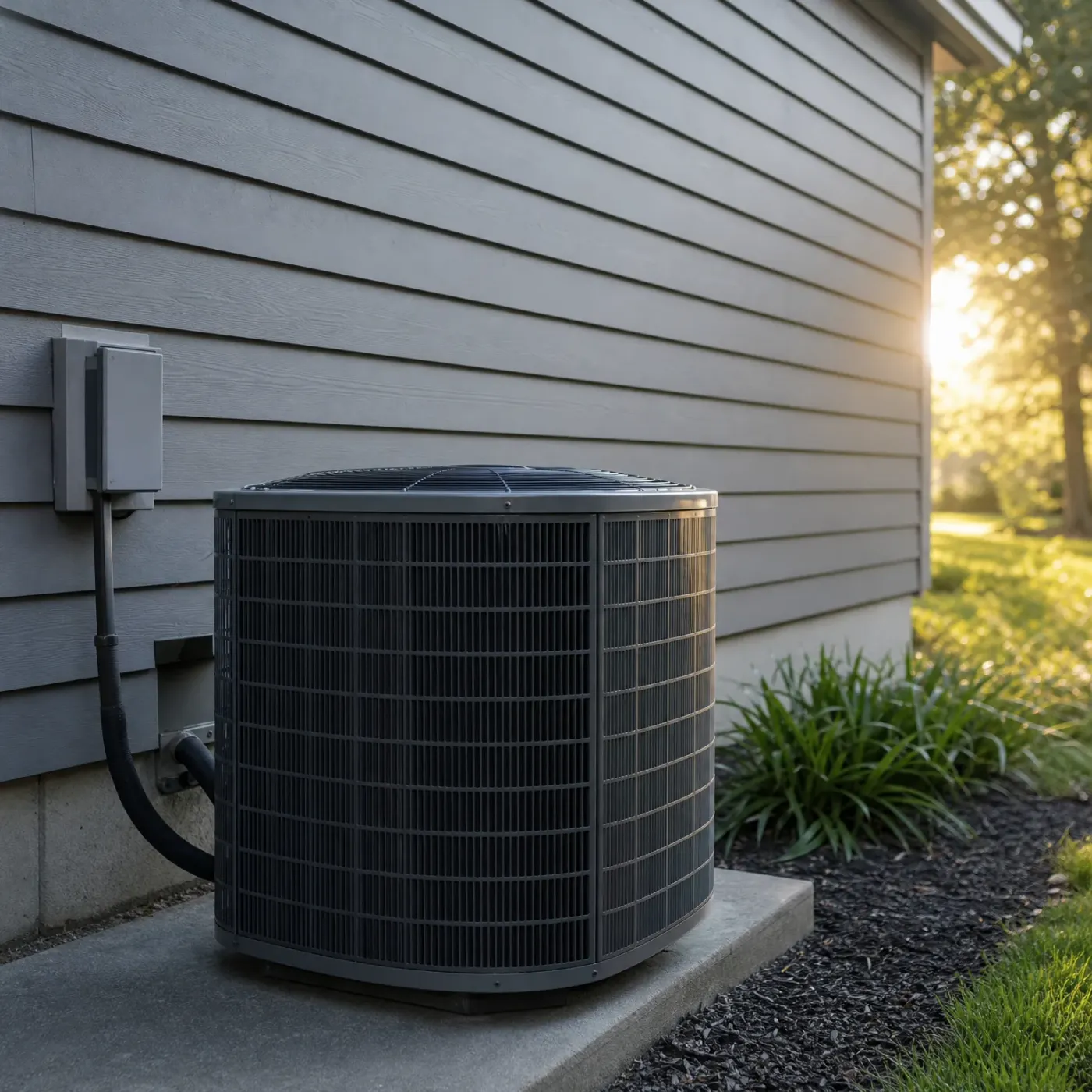
An outdoor air conditioner condenser unit on a concrete pad beside a gray horizontal-lap-sided house, with an electrical disconnect box and refrigerant line on the wall, grass, shrubs and a tree with low sun behind.

Describe it once

Skip calling around

Your request stays with one local pro.

There's no charge for the request.