





What size heat pump a New Hampshire home needs

Get in touch with a local installer about a new heat pump.

Connect with a pro

There's no single size that fits every New Hampshire house. The right size comes from a load calculation, a room by room look at your square footage, windows, insulation and how the house holds heat through a January night. A heat pump sized by square footage alone almost always ends up wrong. Go too big and it short cycles, turning on and off so fast it never runs long enough to dehumidify or heat evenly. Go too small and it can't keep up when temperatures drop into the single digits, leaving you leaning on backup heat more than you should. Since most homes here heat with oil, a lot of heat pumps going in are sized against an oil furnace that's been doing the job for years, and that comparison only works if someone actually measures the house rather than guessing from the old system's output. A contractor who runs the calculation properly is what gets you a unit that heats through the cold and cools through the summer without waste.

  1. A contractor measures every room, window and wall for heat loss.

  2. That math produces your Manual J load calculation in BTUs.

  3. The sizing accounts for how low temperatures actually drop here.

  4. A unit too large short cycles and leaves rooms uneven.

A gray-haired man in a dark long-sleeve shirt sits on a gray sofa in a living room, looking toward a sunlit window with sheer curtains.
A gray-haired man in a dark green sweatshirt sits on a sofa in a living room, looking toward a bright window, with a houseplant, lamp, fireplace and framed art behind him.
A gray-haired bearded man in a dark green collared sweater sits on a sofa in a living room with a window, houseplant, floor lamp and bookshelves, looking off to the side.
A gray-haired man in a dark green sweater sits on a sofa in a sunlit living room, looking off to the side, with a framed landscape painting, dining table and shelving behind him.

Why oversizing costs you here

A heat pump that's too big for the house cools the air fast and shuts off before it pulls the moisture out, so rooms feel clammy even though the thermostat says it's satisfied. In the shoulder months that means more cycling, not less, and with power priced the way it is here, every extra cycle shows up on the bill. The unit also shuts off before it finishes a full heating cycle in January, so rooms near the thermostat run warm while rooms farther away stay cold.


What an oil furnace won't tell you

If your house has heated with oil, there's no existing ductwork or system size to size the heat pump against. Oil furnaces and heat pumps move heat differently, so a BTU rating that worked for the furnace doesn't carry over. That's one more reason the load calculation has to start from the house itself, the walls, windows and insulation, rather than from whatever heated the place before. Skipping that step means guessing twice: once on the old system, once on the new one.

A woman with shoulder-length dark brown hair in a cream knit cardigan sits in an upholstered armchair beside a window, looking off to the side, with a white bookshelf and potted plant blurred behind her.
A woman with dark hair in a bun sits wrapped in a chunky knit blanket on a couch with a child resting his head on her shoulder, eyes closed, beside a lit lamp and bookshelf indoors.

Get the size wrong and you feel it room by room. One floor runs cold while the thermostat says everything is fine, because the unit can't move enough heat to reach the far bedroom but satisfies the sensor near it. If the heat pump is sharing the job with your oil furnace, bad sizing confuses the handoff, so the furnace kicks in earlier than it should or the heat pump keeps working past the point where it's still efficient. Go too small and the backup heat carries more of the load than it needs to, and at New Hampshire's electric rates that adds up fast. Go too big and the unit short cycles, running in bursts instead of long steady stretches, which puts extra wear on the compressor winter after winter. None of this shows up on a spec sheet. It shows up in January, when the unit matched to your house holds its temperature through a cold snap and the one sized by guesswork doesn't.

What the wrong size costs you

  • A heat pump sized wrong in your house means rooms upstairs stay cold while the thermostat downstairs says it's satisfied.
  • If you're pairing the heat pump with your oil furnace, the wrong size throws off when each system should carry the load.
  • An undersized unit leans on backup heat more often, and with electric rates this high that shows up fast on your bill.
  • An oversized unit cycles on and off instead of running long, steady stretches, which wears on the compressor over years of New Hampshire winters.
  • Correct sizing is what lets the heat pump keep working efficiently once temperatures drop well below freezing.
  • A unit matched to your house holds steady through a cold snap instead of struggling to keep up room by room.
A gray outdoor condenser unit on a concrete pad beside a house with horizontal lap siding, a conduit and disconnect box on the wall, a shrub with white flowers at right and evergreen foliage at left.
A properly sized heat pump runs steadily and holds the temperature you set without laboring through a cold January night.
An outdoor air conditioning condenser unit with a top fan grille sits on a concrete pad beside a house with horizontal siding and a concrete step.
A unit sized by guesswork instead of a load calculation grows dirty and strained well before its time, fighting a losing battle against New Hampshire winters.

Heat Pump Alone or Paired With Oil

Heat pump alone

  • A cold-climate heat pump sized to your house can carry the load down to single digits before it needs backup.
  • Below that point output drops off and the house relies on resistance heat strips, which cost more to run than oil at New Hampshire power rates.
  • No oil deliveries, no tank to monitor, no burner to service, just the one system running year round.
  • Sizing has to account for the coldest nights you actually get, not an average, or the unit falls short exactly when you need it most.
  • Summers here are mild enough that cooling rarely pushes the system hard, so the sizing math leans on winter design temperature.

Heat pump paired with oil furnace

  • The heat pump carries the house through fall and most of winter, and the oil furnace takes over once temperatures drop below where the heat pump runs efficiently.
  • The furnace stays as backup, so there's less exposure if the heat pump can't keep up on the coldest stretch of January.
  • Oil deliveries and burner service continue, just less often since the furnace isn't running the whole season.
  • A contractor sets the switchover point based on your house's load and the furnace's output, not a guess.
  • Getting that handoff point wrong means the furnace fires too early and you lose the savings, or too late and the house falls behind on a cold night.
  • Two systems means two things to maintain, even if one runs less than it used to.
A two-story cream-colored house with horizontal siding and a gray hipped roof, flanked by large green trees and shrubs, with a concrete walkway crossing a lawn to a wet street in the foreground.

New Hampshire summers don't feel heavy the way they do further south. The average dew point across June, July and August runs 59°F, which is on the comfortable side, so your heat pump isn't fighting constant moisture the way one in a muggier state would. That changes what sizing is really solving for here. A unit picked to handle a sticky August is bigger than this house needs, and that extra capacity works against you the other nine months, short cycling and never settling into a steady run. The contractor you're matched with works on heat pumps in New Hampshire homes all year, through the dry summers and the cold they're actually built for, and sizes yours for both instead of guessing from a spec sheet.

NASA POWER T2MDEW county cells weighted by homes

Get your heat pump to the right pro

One installer gets your project, so there's no bidding war over it.

Asking costs nothing, and the choice to hire stays yours.

A beige outdoor air conditioning condenser unit on a concrete pad beside a house with horizontal vinyl siding, with refrigerant lines and a disconnect box on the wall, surrounded by dark mulch and a green shrub at left.

Running the way it should

A correctly sized heat pump sits quiet on its pad, cycling on and off at a normal pace through the day. The disconnect box and wiring carry steady load, nothing straining. Rooms hold the temperature you set, and the unit isn't fighting to catch up on a cold morning.

An outdoor air conditioner condenser unit on a concrete pad beside a house with horizontal lap siding, with a shrub to the left, bare dirt in front, and conduit and a metal disconnect box on the wall.

Sized wrong and showing it

A unit sized by guesswork works harder than it should, running long stretches or short cycling depending on which way the sizing missed. The strain shows up early, in a compressor that wears faster and a breaker that trips more than it ought to. A local contractor who sizes these every season can tell you which one you're looking at.

Why does one room never feel right?

You might have a bedroom upstairs that never cools past a certain point in July, or a living room that overshoots and gets cold fast on a mild October day. You might notice the unit outside clicking on and off more than it used to, or running long stretches on a January night without the house ever feeling warm. Some rooms get drafty near the windows while others stay stuffy. If you're splitting the load with your oil furnace, you might notice the oil burner kicking on more than it should, even on days that aren't that cold. None of this means the equipment is failing. It usually means the size was never matched to the house.

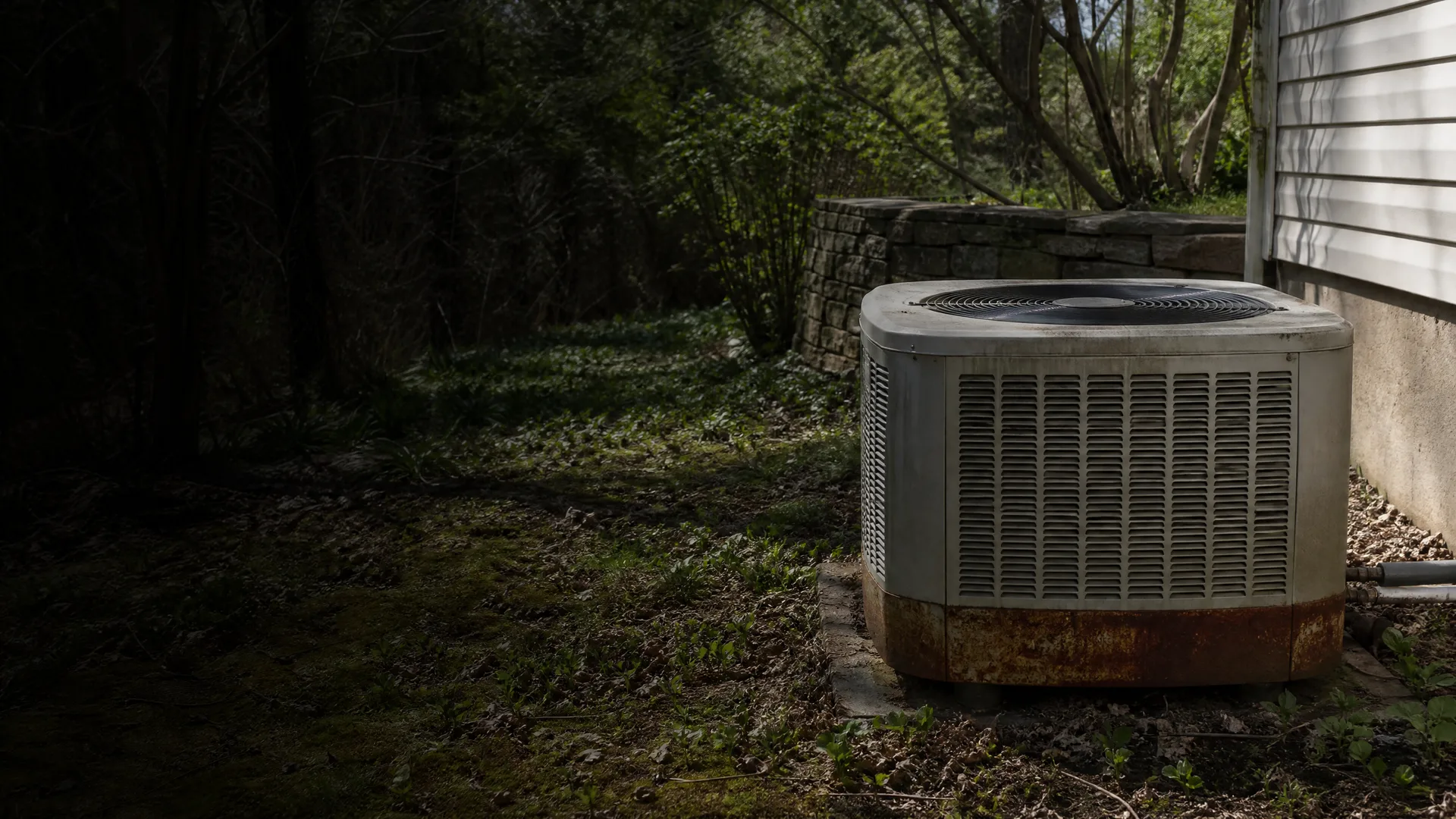
A weathered outdoor condenser unit with rust along its base sits on a pad beside a house with vinyl siding, next to a low stone wall and shaded vegetation.

The snow is finally gone from the side yard, just a few patches left under the fence line where the sun doesn't reach. You walk past the outdoor unit on your way to check the garden beds and notice the rust again, spreading along the base where the metal meets the concrete pad. It's been there a couple years now, a little worse each spring. The unit still runs. It kicked on fine all winter, carrying what it could before the oil furnace took over on the coldest nights. But standing there in the thaw, looking at how low the rust has crept, you wonder if it was ever sized right for this house, or if it's just been working harder than it should.

Power costs 24.53 cents per kilowatt-hour statewide

At 24.53 cents per kilowatt-hour, every degree of oversizing shows up on your bill. A heat pump that's too big cycles more often to dump heat fast, and each start draws power at the rate you're already paying. Getting the size right here matters more than in states paying half as much.

EIA-861 2025 statewide residential average

A white outdoor heat pump unit on rubber feet atop a concrete pad beside a light stucco wall, with gray siding and a small shrub at the left edge.

Pairing with your oil furnace

Most houses here already have an oil furnace, and a lot of homeowners add a heat pump to carry the mild months and let the oil take over when it's truly cold. Sizing for that setup means the contractor isn't trying to cover the coldest night of the year with the heat pump alone. The unit gets sized to run efficiently through fall and spring, with the furnace picking up once temperatures drop past where the heat pump can still deliver heat cheaply.

A gray outdoor heat pump unit with a large circular fan grille sits on a concrete pad beside a house with horizontal siding, surrounded by gravel and grass, with a conduit and junction box on the wall.

Replacing oil heat entirely

Some homeowners want the heat pump to do all the heating and retire the oil furnace altogether. That changes the math. The contractor has to size for the coldest stretch New Hampshire sees, not just the shoulder months, and pick a cold-climate unit rated to keep producing heat at those temperatures. Get this undersized and you're leaning on electric resistance strips on the coldest nights, which costs far more to run than the oil furnace you replaced.

A woman stands in the open doorway of a white stucco house holding the dark door, facing a man in a black cap and shirt seen from behind in the blurred foreground, with a potted flowering plant beside the entry.

The right size comes from your house, not a chart

A load calculation is what gets you there. Square footage, insulation, windows, how your house holds heat on a cold night, all of it feeds into one number sized to your rooms, not a guess. That's what keeps a heat pump from running ragged in July or leaving a bedroom cold in January, and what keeps it working right alongside the oil furnace if that's how your house is set up.

Getting that calculation done right takes someone who works on this equipment in New Hampshire homes every season, who's seen what sizing mistakes look like a year in and knows how to avoid them. When you request a quote, you're matched with one licensed local contractor suited to your house, not a handful of companies competing for your call. They'll reach out, walk through your rooms, and tell you the number your house actually needs.

A dark ceramic mug on a round wooden table beside a light grey sofa with a woven cushion and knit throw, with a window, potted plant, floor lamp and wooden cabinet blurred in the background.
A gray outdoor heat pump unit mounted on a concrete pad beside a dark horizontal-slat clad house wall, with gravel ground and shrubs nearby.

The right pro for this job

Step 1 of 3: Equipment