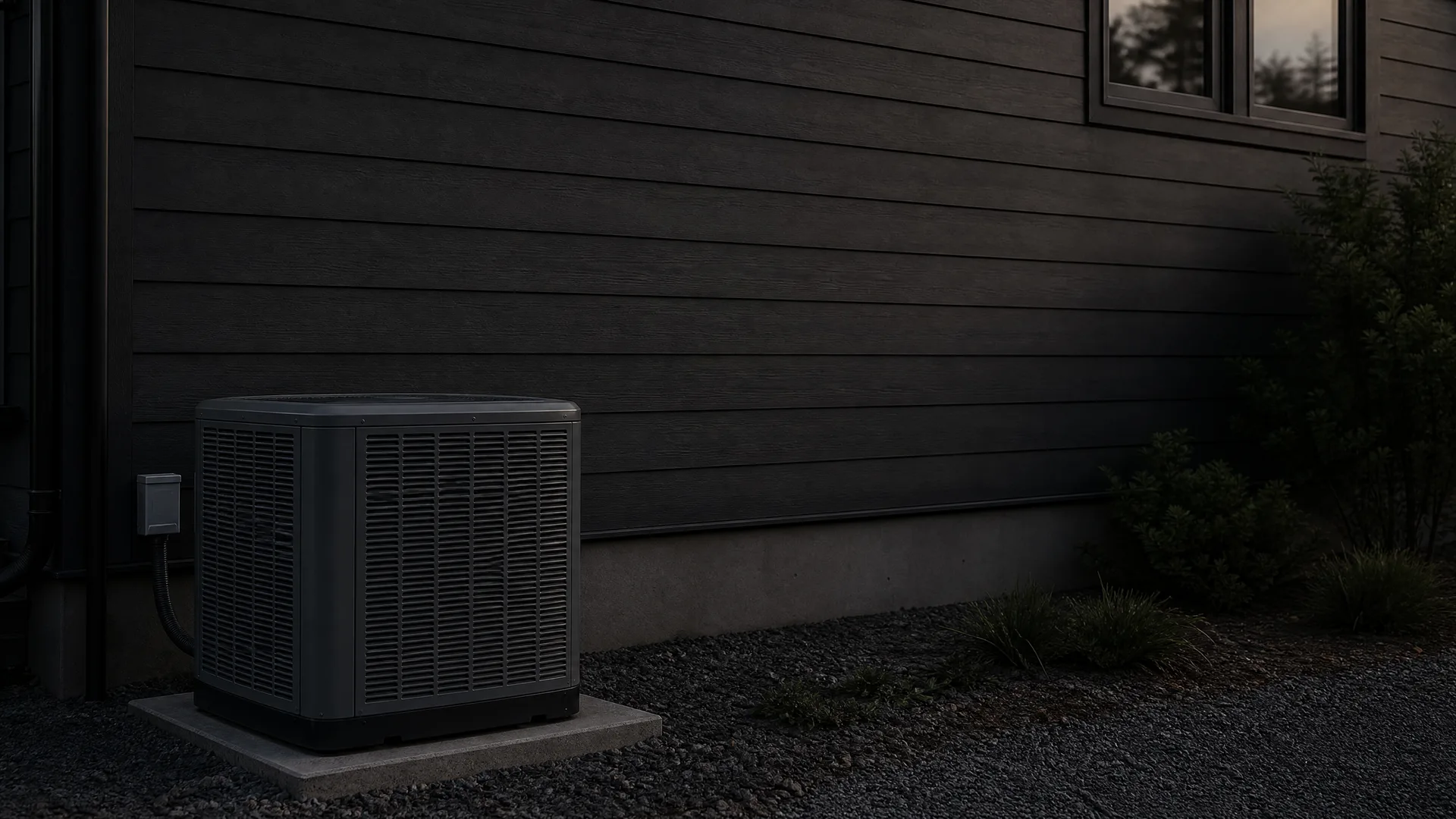
A local pro who services heat pumps gets in touch about the tune-up.
A heat pump in New Hampshire works harder than most. It carries you through warm summers without the heavy air, and it keeps pulling its weight into the cold months, often alongside an oil furnace that takes over when temperatures drop low. A tune-up checks both sides of that job, the cooling and the heating, not just one.
With power here among the most expensive in the country, a heat pump that's lost efficiency costs you more every month it runs that way. A coil caked with dust, a refrigerant charge that's drifted low, a defrost cycle that isn't kicking in right. None of these stop the system outright. They just make it work harder for less, and you pay for that difference on every bill until someone catches it.
You don't have to track down who's qualified to look at a heat pump versus a standard AC unit, or who actually answers the phone this week. Send in what you need and a contractor who works on heat pump systems in your area gets in touch with you. You're not left to call around and compare, and you're not stuck reading reviews trying to guess who knows this equipment well.
Once you've sent the request, that part is off your plate. The contractor who reaches out will already know what you're dealing with: a heat pump running through a New Hampshire summer and winter, likely paired with oil heat, on an electric rate that doesn't forgive waste. You won't have to explain your setup from scratch.
What's below walks through what a tune-up actually covers on a heat pump, so you know what to expect before anyone shows up.
What does a heat pump tune-up actually include in New Hampshire?
You've heard "tune-up" a hundred times but you want to know what a technician actually does when they come out to service your heat pump, especially since yours is probably doing double duty with an oil furnace through the winter. You're not looking for a sales pitch, just a straight list of what's checked and why it matters here.
It covers the refrigerant charge, the coils, the defrost cycle, and the switch to the furnace
A technician checks the refrigerant charge, since a unit running low loses efficiency fast and costs more to run on power priced the way it is here. The outdoor coil gets cleaned, because a dirty coil makes the compressor work harder in both July heat and January cold. The defrost cycle gets tested, which matters more in New Hampshire than warmer states since the outdoor unit has more frost to shed most winters. If your system is paired with an oil furnace, the technician checks that the switchover between the two happens at the right temperature, so you're not running the wrong one on a cold morning.
What skipping it costs you, specifically
A heat pump that's losing efficiency doesn't usually quit outright. It just runs longer to hit the same temperature, and with power costs what they are in New Hampshire, that difference shows up fast on the bill. A dirty coil or a low refrigerant charge can cost you real money over a winter before the unit ever fails outright. If yours is the system carrying the house until the oil furnace kicks in on the coldest days, that gap matters even more, because every degree it struggles to produce is a degree the furnace has to make up for sooner.
There's also the question of what happens when it does fail. A heat pump that's never been serviced is more likely to break down on the day you need it most, whether that's a July afternoon or a January morning before the furnace takes over. Finding a contractor at that point is its own scramble. Getting matched with one ahead of time, someone who already knows your system and your situation, means that when something does come up, you're not starting from zero.
Clean coil, clear path
The fins on this unit are open, so air moves through them the way the system was built to use it. The lines running to the disconnect box are free of grime, and the unit is pulling the cold or warm air it needs without extra strain on the compressor.
Buildup doing its damage
Dust and grime have packed into the fins and the wire grille here. Air can't pass through like it should, so the unit runs longer to move the same amount of heat. That extra runtime is what shows up on your power bill.
Send the form, and lining up the heat pump tune-up stops being yours to chase.
There's no charge for the request.
Why the outdoor unit matters most
Your heat pump's outdoor unit sits exposed to everything New Hampshire weather does over a year, from summer pollen to winter ice. A technician checks the refrigerant charge against the manufacturer's spec, because a system running low has to work longer to move the same heat, whether it's pulling warmth out of summer air or pulling it out of cold winter air. They'll also check that the defrost control is cycling correctly, since that's what keeps ice from building up on the coil during the months it's drawing heat from outside air near freezing.
Why the switch to oil matters
In a lot of New Hampshire homes, the heat pump hands off to an oil furnace once it gets too cold outside for the heat pump to keep up efficiently. A tune-up checks the thermostat settings and the controls that manage that handoff, because if the switchover point is set wrong, you end up either running the oil furnace more than you need to or asking the heat pump to keep working past where it can actually keep the house warm. Getting that balance right is part of what the service is checking.
Before you get your heat pump maintenanceAfter you get your heat pump maintenance
A heat pump that runs on autopilot all year skips the defrost checks and coil cleaning that keep it from icing over or losing airflow, and nobody catches the slow decline until the oil furnace is doing more of the work than it should.
A heat pump on a maintenance schedule gets its defrost cycle tested and its coils cleaned before ice or dirt cost it airflow, so it keeps carrying its share of the heating load and the oil furnace only steps in when it's actually needed.
Power costs 24.53 cents per kilowatt-hour statewide
At 24.53 cents per kilowatt-hour, every extra hour your heat pump runs to make up for a dirty coil or low charge lands on your bill right away. Keeping it tuned is what keeps that number from creeping up on you.
EIA-861 2025 statewide residential average
What a tune-up settles for you
A tune-up checks the refrigerant charge, the defrost cycle, and the coils, the parts most likely to quietly lose efficiency over a year.
A heat pump that isn't maintained doesn't fail outright, it just runs longer and costs more on a power bill that's already high in New Hampshire.
Catching a weak system before winter means your oil furnace isn't picking up slack the heat pump should be handling on its own.
Once you send the form, finding a contractor is off your plate, someone who handles this work gets matched to your situation.
A clean, checked unit going into summer or winter runs the way it was built to, without the extra strain nobody notices until the bill arrives.
The outdoor unit takes the brunt of New Hampshire weather all year, so what a technician checks there matters more than almost anything else on the system.
A heat pump tune-up in New Hampshire comes down to a short list of parts that decide how the system runs for the rest of the year. The refrigerant charge, the defrost cycle, the coils, the outdoor unit that takes the weather head on. A technician checks these against what the manufacturer specifies, not a guess, and that's what separates a system running the way it was built to from one quietly working harder than it needs to. You won't see that difference right away. It shows up as a longer runtime, then as a number on a power bill that's already among the highest in the country, then as an oil furnace picking up more of the load than it should once the cold sets in. None of that announces itself. A system that's falling behind keeps running, just not the way it should. That's the case for getting it looked at before summer or before the first hard freeze, whichever comes first for you. Once you send the form, the work of finding someone who does this is no longer yours to carry. A contractor who handles heat pump maintenance gets matched to what you've described, and reaching out from there is on them. You've read what gets checked and why it matters here. What's left is deciding whether this is the year you get ahead of it instead of finding out the hard way what a missed defrost cycle costs in February.
A pro who works on heat pumps
Send the form and the heat pump tune-up stops being something to remember.