Describe your heat pump job, and a local pro who handles it gets in touch.
A heat pump in New Hampshire usually runs 12 to 15 years before it needs replacing. How close you are to that number depends on how the unit was installed, how it's been serviced, and how hard it's had to work against winters here. In a state where oil heat is still the default and electric rates run high, a heat pump that's losing efficiency costs you twice: once in comfort, once on the bill.
Most homeowners don't know where their system falls on that timeline until something goes wrong. A heat pump that's struggling to keep up on a cold January morning, or short-cycling, or running constantly without warming the house the way it used to, is telling you something about its age even if nobody's looked at the install date.
Figuring out whether your system is worth repairing again or ready to be replaced isn't something you can answer by guessing. It takes someone looking at the actual unit, how it was set up, and what condition it's in now. That's a different conversation than the one you'd have about a furnace or a boiler, and it matters more here than in milder climates, since a heat pump in New Hampshire has to work harder for more of the year.
Finding that out usually means calling around, explaining your system to three or four different companies, and sitting with quotes that don't line up because nobody looked at the same things. None of that gets you closer to warm air in February.
This page connects you with a contractor who installs heat pumps and knows what New Hampshire winters demand from them. Once you answer a few questions about your situation, that contractor reaches out to you directly, with a sense of your system already in hand instead of starting from zero on the phone.
How long do heat pumps last in New Hampshire?
You're trying to get a sense of what to expect from your heat pump before you have to think about replacing it. Maybe it's been running fine for years and you're just curious, or maybe it's started acting up and you want to know if age is the reason. Either way, you want a straight answer, not a sales pitch.
Most heat pumps last 12 to 15 years here
A heat pump works harder in New Hampshire than it would in a milder climate, because it's pulling heat out of cold outdoor air for months at a stretch rather than just cooling a warm summer. That extra strain on the compressor is what tends to shorten the lifespan compared to the 15 to 20 years you'll sometimes hear quoted for the country as a whole. If your heat pump is your main source of heat through the winter rather than backup to oil, it's likely seen more run hours than a typical unit, which can push it toward the lower end of that range.
Before you get your heat pump installationAfter you get your heat pump installation
Is your heat pump slowing down for the winter ahead
Your heat pump works hardest right when you need it most, on the coldest nights of a New Hampshire winter. An older unit will start to show it. It runs longer to hold the same temperature, cycling on and off more than it used to. You might hear it straining, a rattle or a hum that wasn't there before. Rooms farther from the unit feel cooler than they should. The outdoor coil ices over and takes longer to defrost. None of this happens overnight, but if your home still relies on it to keep everyone comfortable through a hard winter, a unit that's struggling now is one that's more likely to fail on a night you can't afford it to.
Answer a few questions instead of calling shop after shop.
Sending the form costs nothing.
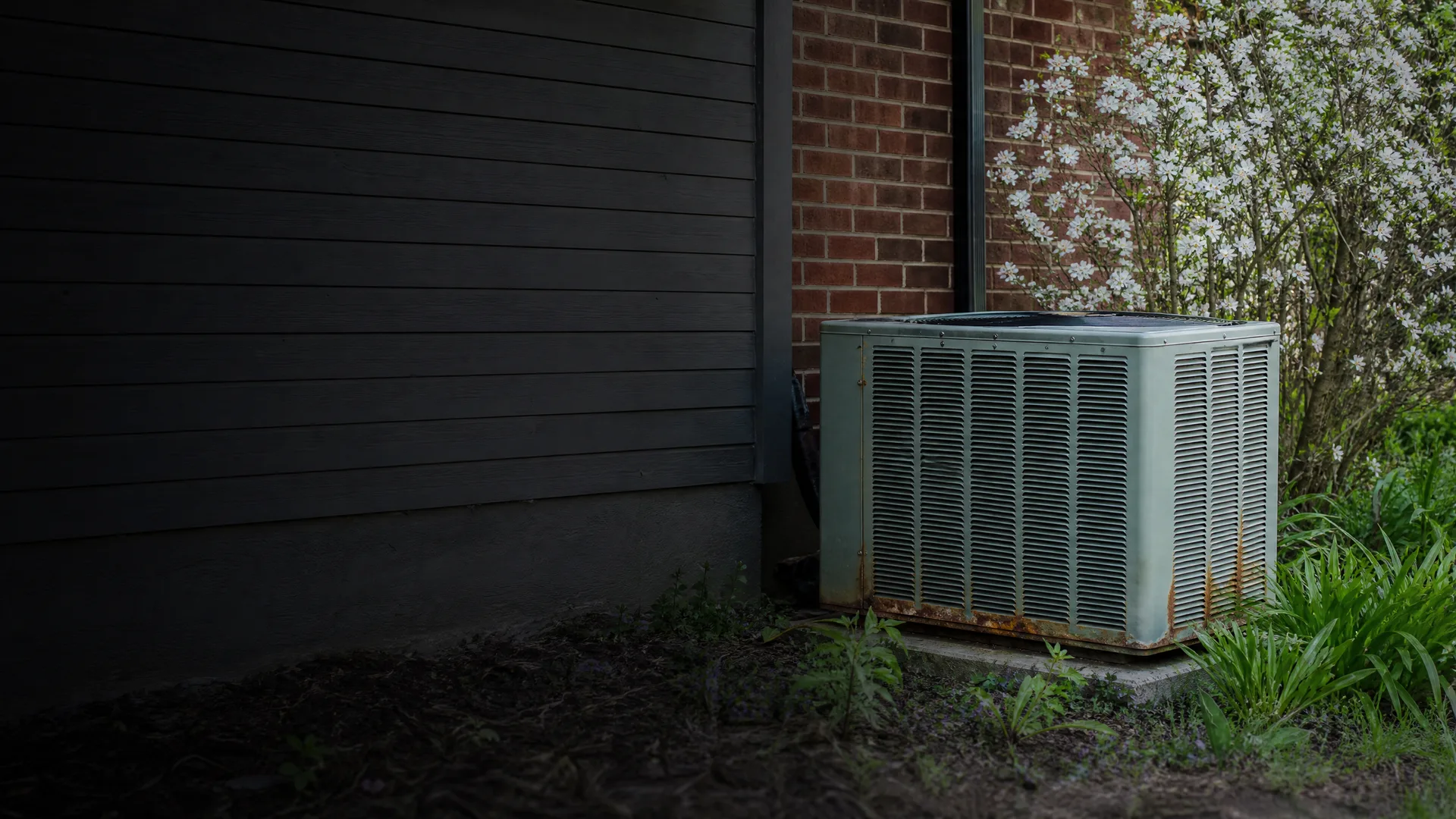
You're out checking the yard that first mild day in March, the snow finally gone from the grass. You walk past the heat pump sitting against the side of the house and notice the rust creeping along its base, worse than you remembered from last fall. You crouch down and run a finger along the metal. The unit's been through a lot of winters out here, and it shows more on the cabinet than it ever did in how the house felt. You straighten up, glance at the back door, and figure you'll mention it to someone before next winter asks more of it than it has left to give.
What actually wears a heat pump out in a New Hampshire winter
A heat pump moves heat from the outside air into your house, even when it's cold out. Below a certain outdoor temperature, most units switch on a backup heat strip or rely on a secondary system to keep up. That switch happens more often here than in milder states, and every cycle puts load on the compressor and the reversing valve, the part that lets the unit switch between heating and cooling. The defrost cycle runs more too, melting the frost that builds on the outdoor coil during damp, cold stretches. All of that adds hours the unit wouldn't log somewhere warmer.
None of this means your unit is doomed early. It means the install matters more here than it would in a place with a gentler winter: the right size for your house, a thermostat setting that doesn't force the backup heat to fight the compressor, a technician who checks the refrigerant charge instead of guessing. If you're not sure your system was set up with New Hampshire winters in mind, a contractor familiar with the area can look at what you have and tell you straight whether it's working the way it should.
1
Outdoor air passes over a cold refrigerant coil outside
2
Refrigerant absorbs heat and turns into a low-pressure gas
3
The compressor squeezes that gas, raising its temperature
4
Hot gas flows inside and releases heat through the indoor coil
Power costs 24.53 cents per kilowatt-hour statewide
At 24.53 cents per kilowatt-hour, every hour your heat pump runs backup strip heat on a cold night costs you more here than almost anywhere else. An aging unit that's lost efficiency, or one that leans hard on backup heat, shows up fast on your bill.
EIA-861 2025 statewide residential average
Running the way it should
A heat pump that's keeping up looks like this: clean grille, clear space around the pad, no rust creeping along the base. It cycles on, holds the temperature, and shuts off. On a cold January night it isn't straining to keep the house where you want it.
Falling behind
Dirt and grime caked on the grille and top panel block airflow the unit needs to work right. Dead leaves piling up against the base trap moisture against the cabinet. A unit in this shape is running harder than it should, and it shows in how long it keeps cycling on cold nights.
New Hampshire summers don't carry the thick, sticky air you'd get further south, and your heat pump feels that difference. The average summer dew point here is 59°F, which counts as comfortable. That matters because a heat pump pulls double duty, cooling the air and pulling moisture out of it. When the air outside isn't loaded with moisture to begin with, the unit isn't working as hard to wring it out, so it cycles off sooner and spends less time running than it would somewhere muggier. You'll notice it in how rarely it seems to be straining on an August afternoon.
NASA POWER T2MDEW county cells weighted by homes
A heat pump in New Hampshire holds up for 12 to 15 years, less if it's been installed poorly or pushed hard every winter without regular service, more if it's been looked after. That's the honest range, and where your unit falls in it depends on things you can mostly see for yourself: rust at the base, longer run times, a system that cycles more than it used to. You don't have to figure out on your own whether what you're seeing means a repair or a replacement, and you don't have to spend an afternoon calling around, explaining the same thing to every contractor who picks up, then sitting with a stack of quotes trying to tell which one is fair. You already know what your winters ask of this equipment. What's left is finding someone who can look at your specific unit and tell you where it actually stands.